The International Butler Academy

TIBA Standards for Candidates

TIBA Standards are what guide our work, and they are non-negotiable. Meeting our standards is
essential for a candidate's consideration and collaboration. While not everyone may meet those
standards immediately, this does not close the door to opportunity. Demonstrated commitment to
growth and improvement can open a path forward, and support is available to help elevate candidates
to the required level for future consideration. Our standards include:

  1. Personal Presentation Standards
  2. Resume Standards
  3. Cover & Thank You Letter Standards
  4. Photographic Standards
  5. Recorded Video Standards
  6. Interview Standards
  7. Communication Standards

Personal Presentation Standards

TIBA Standards for Personal Presentation
Impeccable grooming and hygiene are absolutely essential for a butler. It reflects the very essence of the profession and communicates competence, attention to detail, and respect. As you are often the first point of contact on behalf of your employer, your appearance sets the tone on their behalf.
Cleanliness and grooming is the unspoken "hello" in the silent language of service.

  • General Standards
    • Personal hygiene must be impeccable at all times. Daily bathing, use of deodorant, and fresh breath are mandatory.
    • Hair must be kept clean, neatly styled, and conservative in appearance. Only natural hair colors are permitted.
    • Fingernails must be short, clean, and well-maintained. Brightly colored polish is not permitted.
    • Fragrance must be light and discreet. Strong scents are prohibited.
    • Jewelry must be minimal and understated. Visible body piercings (other than earrings permitted for ladies) are not allowed.
    • Tattoos must remain covered at all times while in uniform.
  • Standards for Gentlemen
    • Hair shall be worn in a conservative style. It must not touch the collar. Sideburns are to be kept neat and shall not extend below the mid-ear.
    • A clean-shaven appearance is preferred. Beards or moustaches, if worn, must be neatly trimmed, no more than one centimeter in length, and traditional in style.
    • Eyebrows must be neatly maintained.
    • Nails shall be short and clean. Nail polish is not permitted.
    • Jewelry is limited to a plain wedding band and a classic wristwatch.
    • Make-up is not permitted.
  • Standards for Ladies
    • Hair shall be styled neatly and conservatively. If long, it must be secured away from the face.
      Hair accessories must be discreet and in natural tones.
    • Make-up must be subtle and natural in tone. Bright colors and heavy application are prohibited.
    • Nails must be short to medium in length. If polish is worn, it shall be clear, nude, or in muted shades such as pale pink.
    • Jewelry is limited to simple stud or pearl earrings, a plain wedding band, and a classic wristwatch. Dangling or oversized jewelry is not permitted.
    • Fragrance must be discreet and understated.

Resume Standards

TIBA Standards for a Private Service Resume
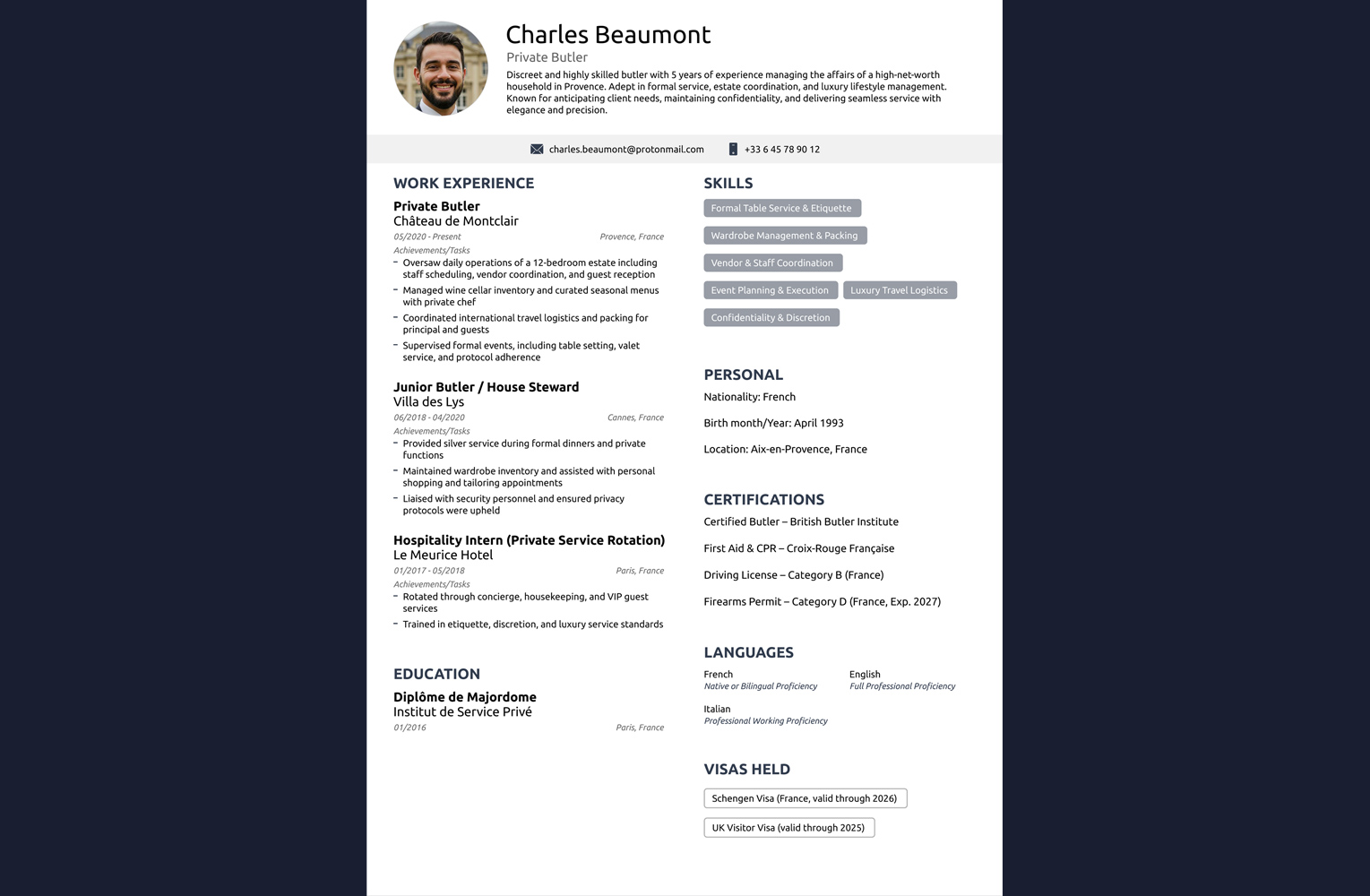
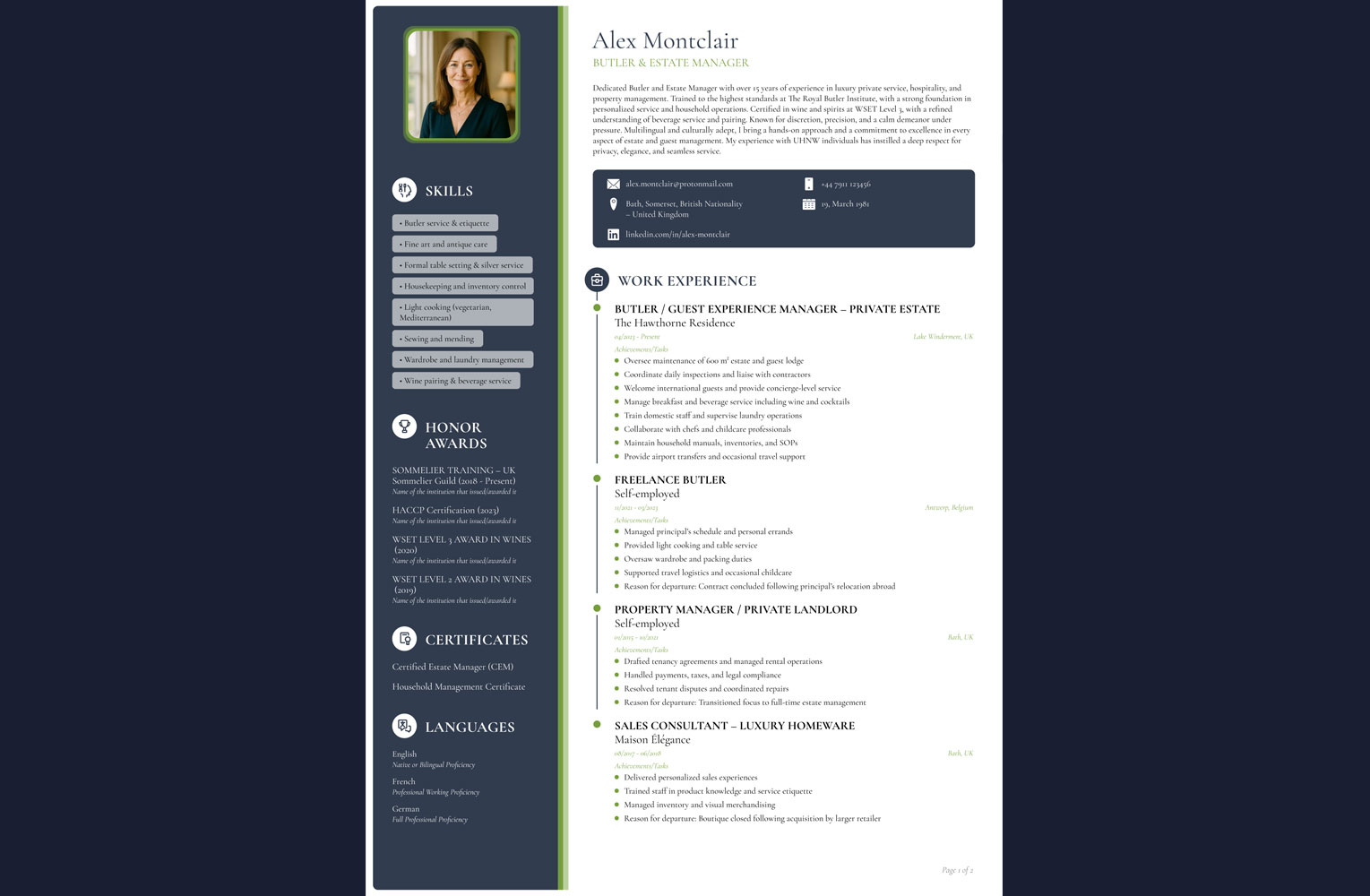
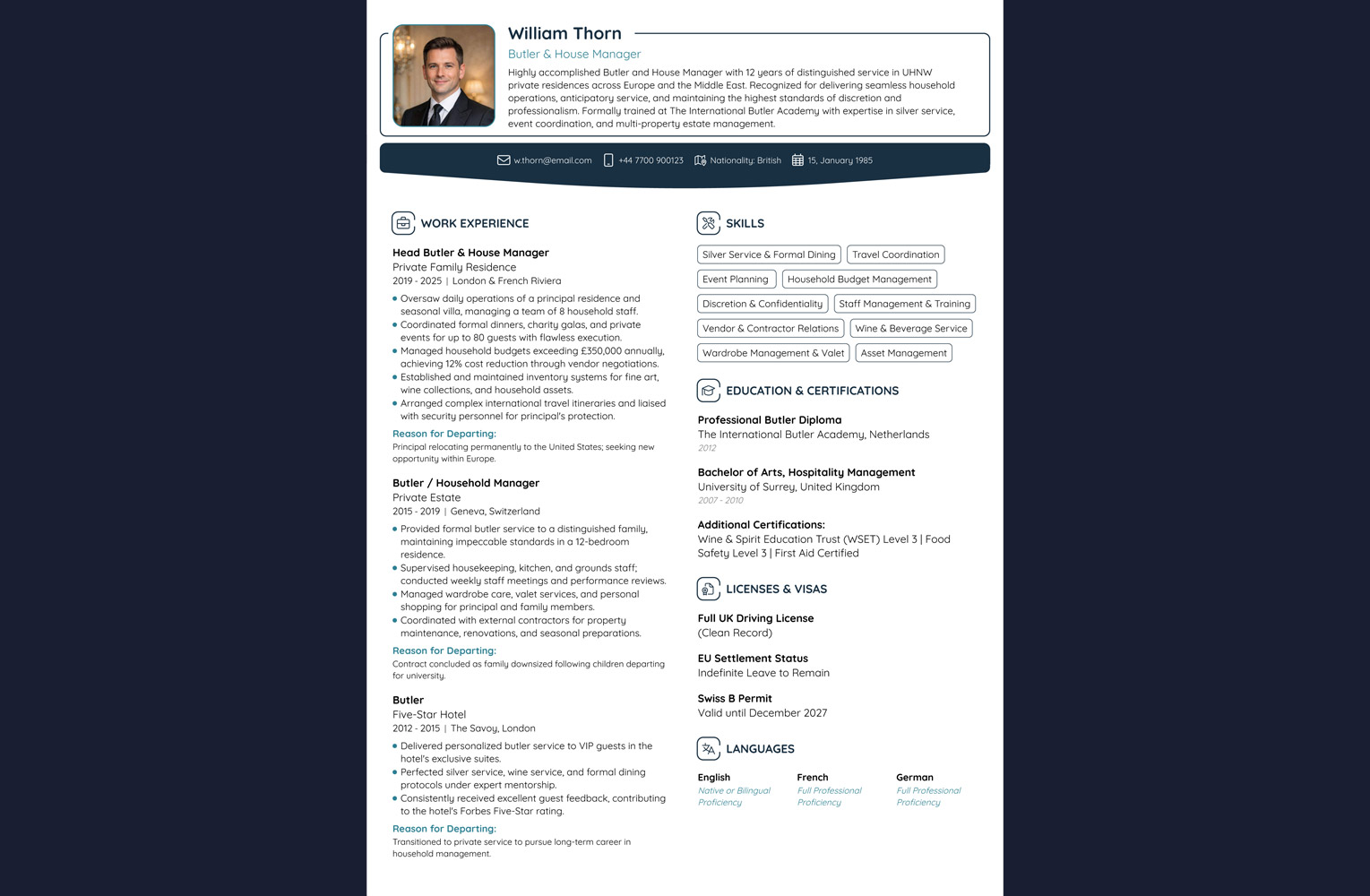
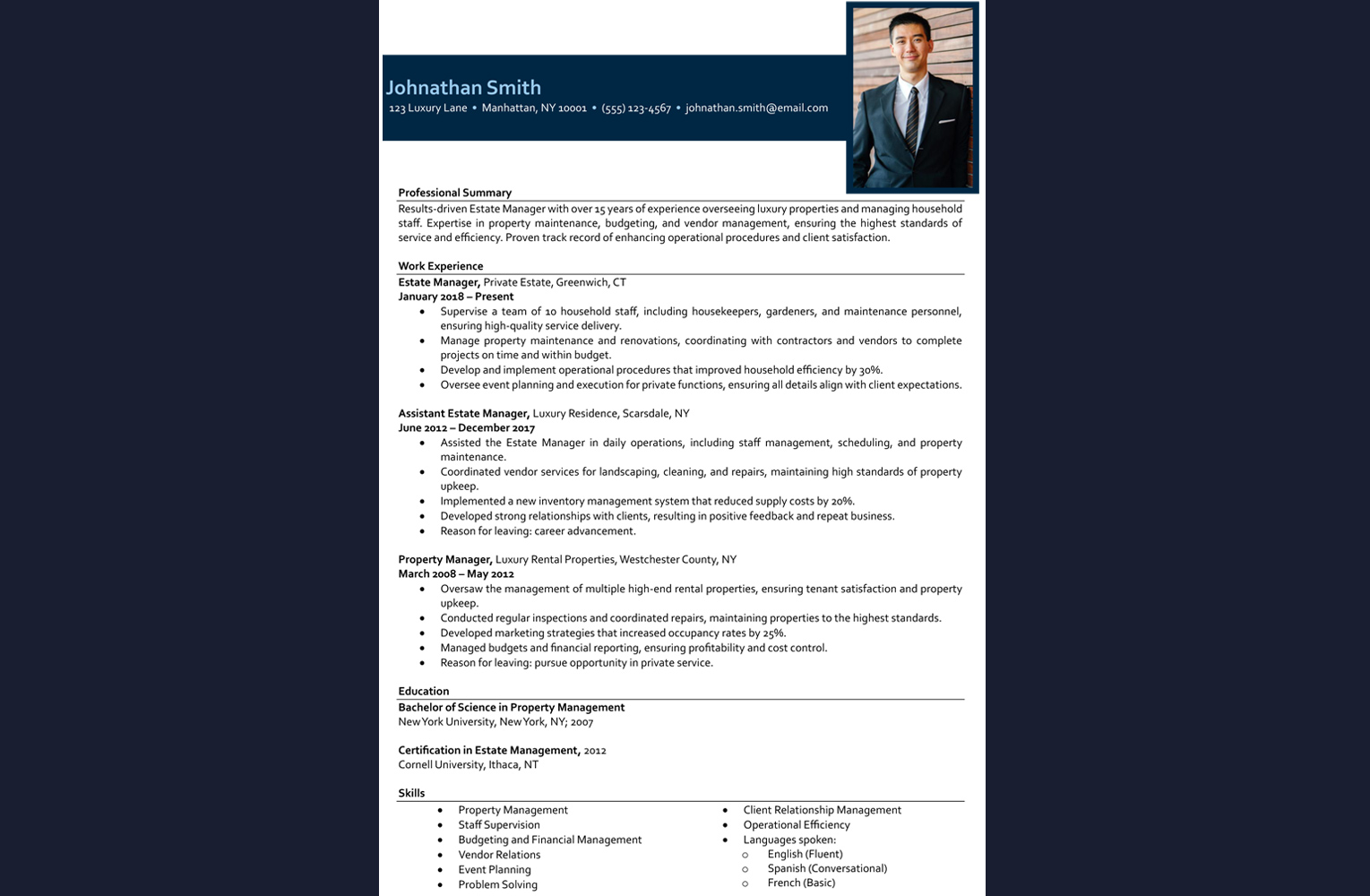
Your resume should highlight relevant skills, experience, and achievements tailored to effectively managing the households, affairs, and lifestyles of high-net-worth clients. They must include a photograph that meets the TIBA Standard photographic guidelines. The resume must be compelling and appealing to read. It is dynamic and can change according to differing positions for which you apply, the amount of experience or education you have received, or the skills you possess. In general, you want to lead with what is the most relevant and attention grabbing information for your audience.
The information required is:

  • Biographical and Contact Information
    • Include your full name, email address, phone number, nationality, and age or birth month and year.
    • Be certain the information is current and professional.
    • Aside from your name, this section does not necessarily need to be the first thing on the page.
  • Professional Summary
    • Write a brief summary, 2 to 3 sentences in length, encapsulating your key skills and experiences.
    • Tailor this section to reflect the specific role you are applying for.
    • Create interest.
  • Work Experience
    • Focus on relevant positions, ideally the last 3 or 4 roles but covering no more than the past 15 years.
    • Use bullet points to describe your responsibilities and achievements.
    • Highlight skills such as negotiation, client and vendor relationship management, and service excellence.
    • Include the reason for departing each previous position.
  • Skills Section
    • List key skills and competencies relevant to the role as they align with the job description.
    • Include languages spoken and proficiency.
  • Education and Certifications
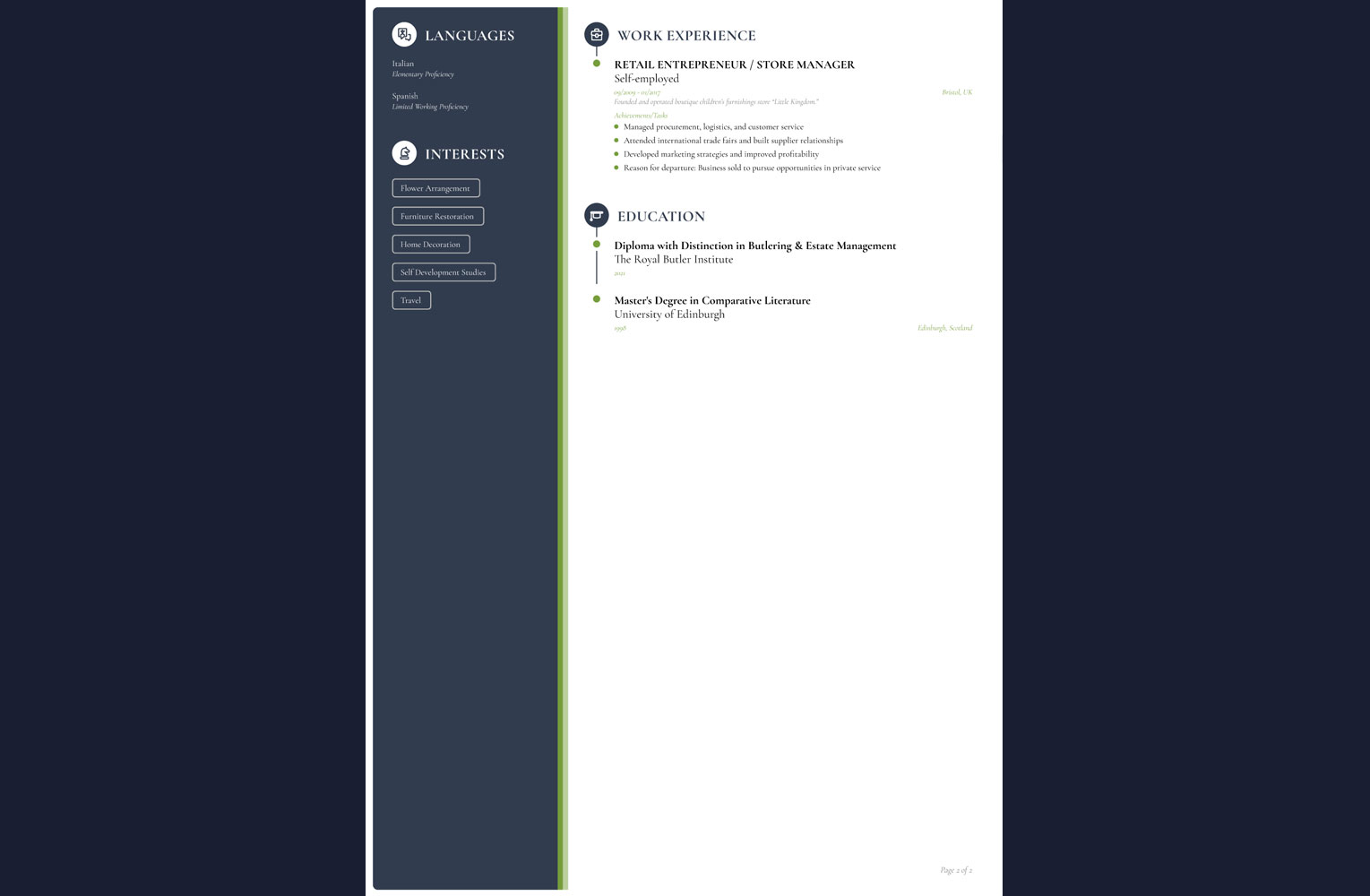
    • Include your educational background and any relevant certifications.
    • Mention any specialized training related to private service roles.
    • Include any licenses you hold, i.e., driving licenses or weapons permits.
    • List any visas you currently hold and dates of expiration.
  • Formatting and Length
    • Resumes must be written in English with no misspellings or typographical errors.
    • Use a clean, professional layout with clear headings and bullet points for easy readability.
    • Utilize a font that is easy to read. Avoid using all capital lettering.
    • Keep the resume concise, ideally no more than 2 pages. Ensure your name and page number appears in the header of any subsequent page after the first.
    • Ensure the resume file name is clear, relevant, and professional. Avoid generic or random titles. A recommended format is: "FirstName LastName - PositionTitle Resume.pdf".
    • Do not include references within the resume document. It is standard practice to provide references upon request; therefore, including a statement such as "References available upon request" is unnecessary.
  • Tailoring for the Position
    • Customize your resume for each position by incorporating key aspects from the job description.
    • Focus on achievements that demonstrate your ability to meet the specific needs of high networth clients.

By meeting the TIBA Standard, your resume will effectively showcase your qualifications and stand out to our private service clientele.

Cover & Thank You Letter Standards

TIBA Standards for Cover & Thank You letters
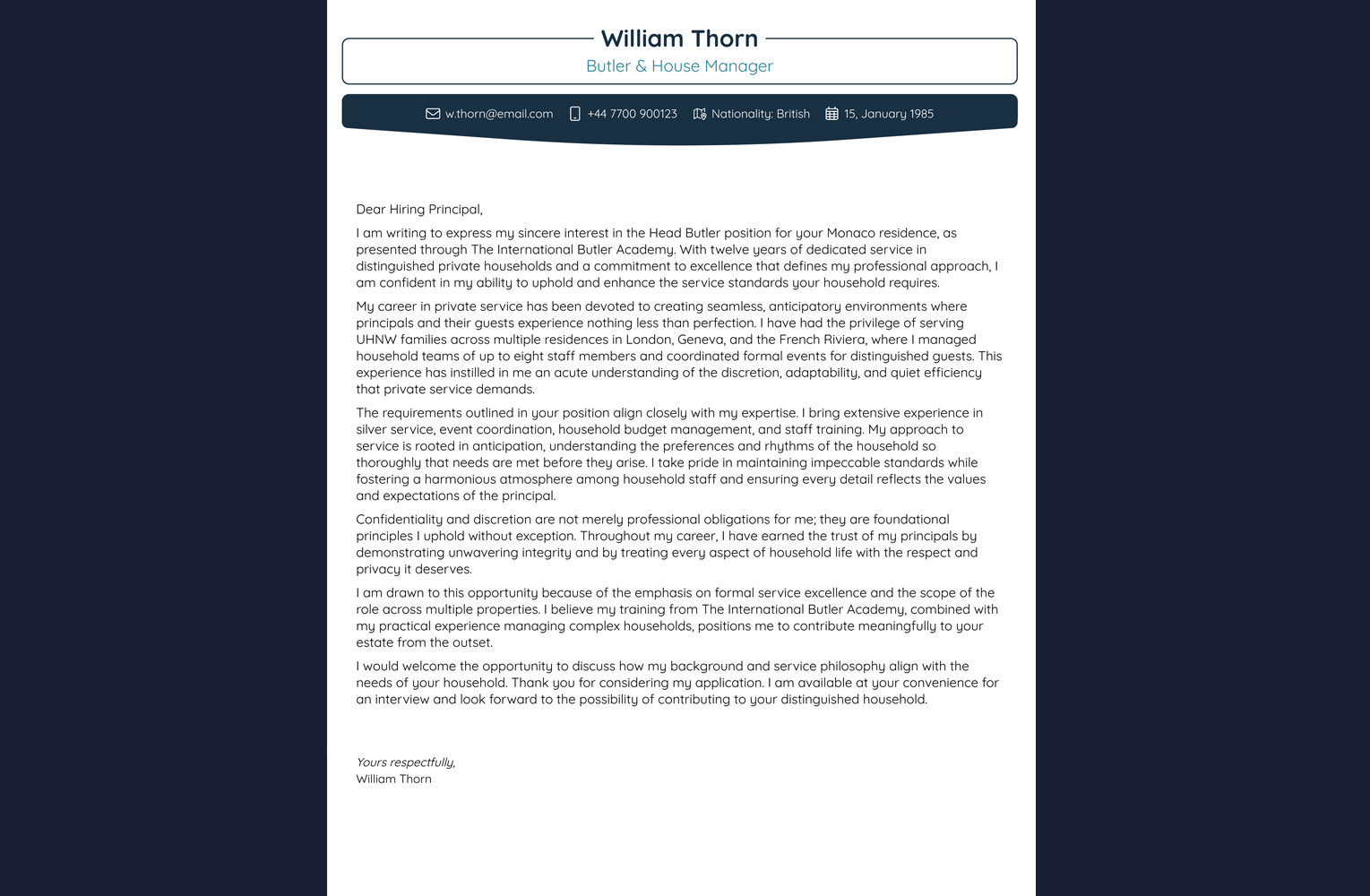
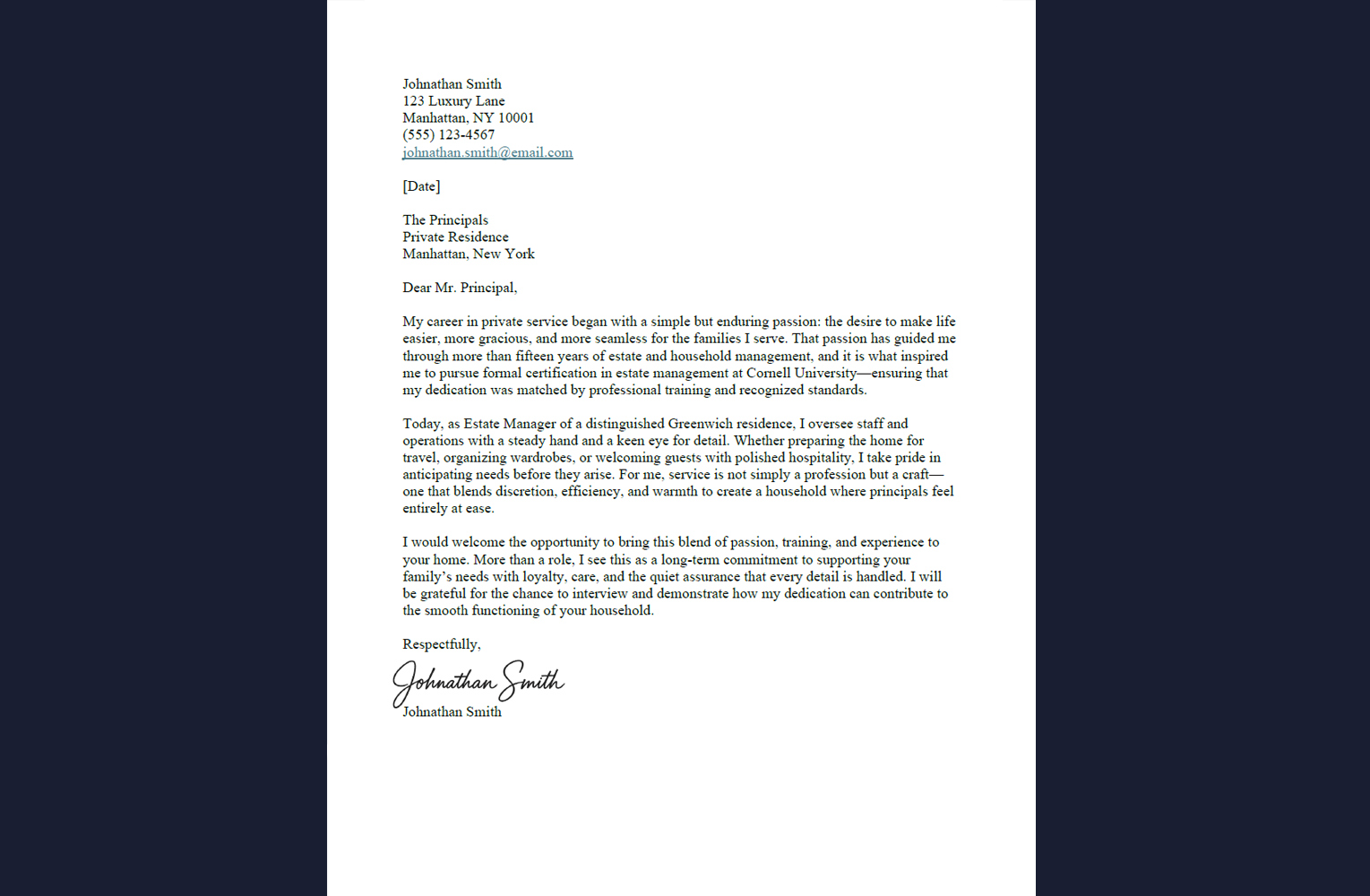
A Cover letter gets you in the door, and a thank-you letter helps you to stand out and seal the deal. Both letters are mandatory for a first impression and opportunity to create a mutual professional connection. Here is what should be in a Cover and Thank You letter.

  • Cover letter:
    A cover letter is often your first impression and answers the question, ‘Why should we interview you?’
    • Personalises your application: It shows you’re applying to this specific job, not sending a generic résumé.
    • Explains your fit: You can connect your skills, experience, and achievements directly to the job requirements.
    • Shows motivation and interest: Employers want to know why you want the role and the company.
    • Highlights soft skills: Communication, enthusiasm, professionalism, and cultural fit are easier to show in writing than on a résumé.
    • Clarifies your story: It can explain career changes, employment gaps, or unique experiences.
       
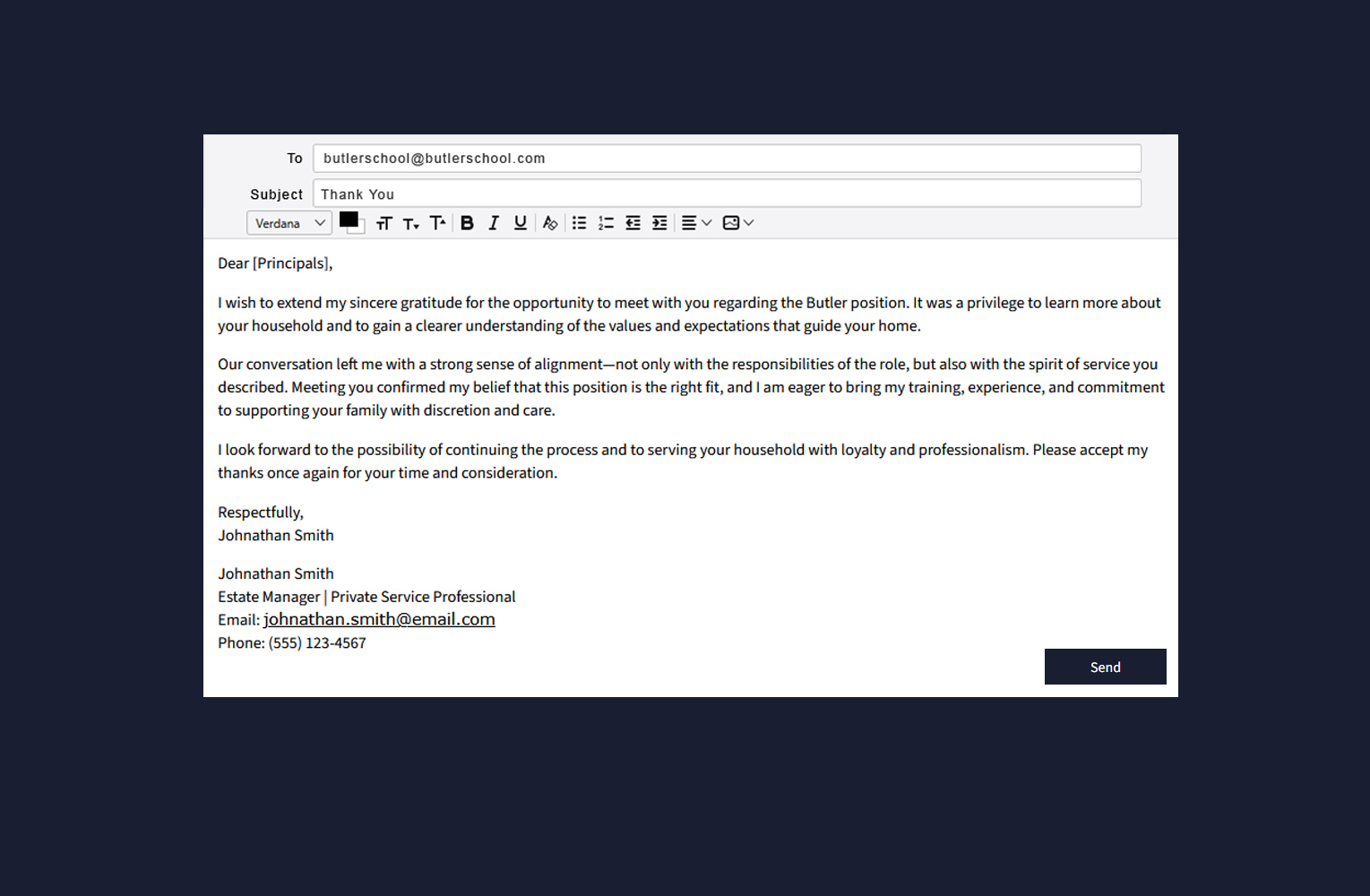
  • Thank-You Letter
    A thank-you letter, after an ‘in-person or online‘ interview, reinforces a positive professional impression and answers the question ‘Why should we remember and choose you?’
    • Demonstrates professionalism and good manners
    • Reinforces your interest in the position
    • Keeps you memorable. Many candidates skip this step.
    • Allows follow-up. You can briefly restate your strengths or clarify something discussed in the interview.
    • Builds rapport. It shows appreciation for the interviewer’s time.
    • Besides the principal and the family, sent a separate thank you letter to the Recruiter for making an interview possible.

Photograph Standards

TIBA Standards for Resume Headshots and Other Photographic Tools
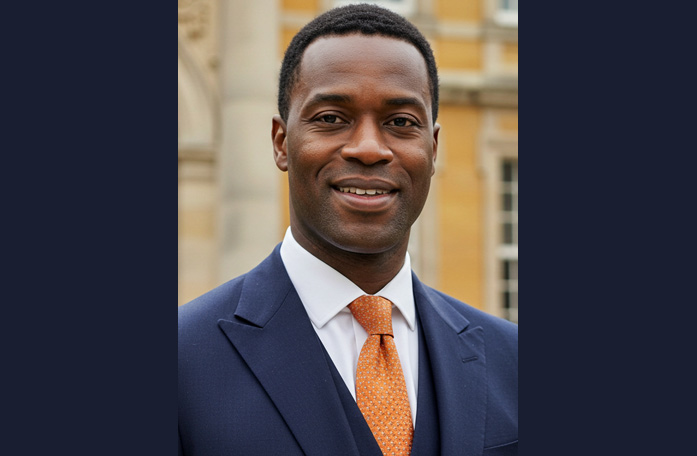
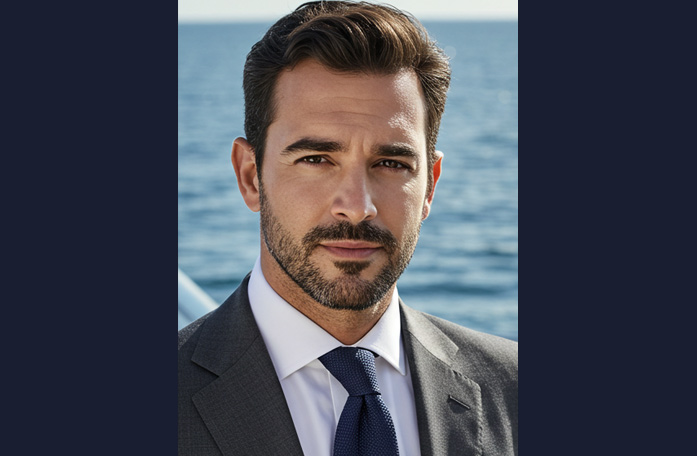
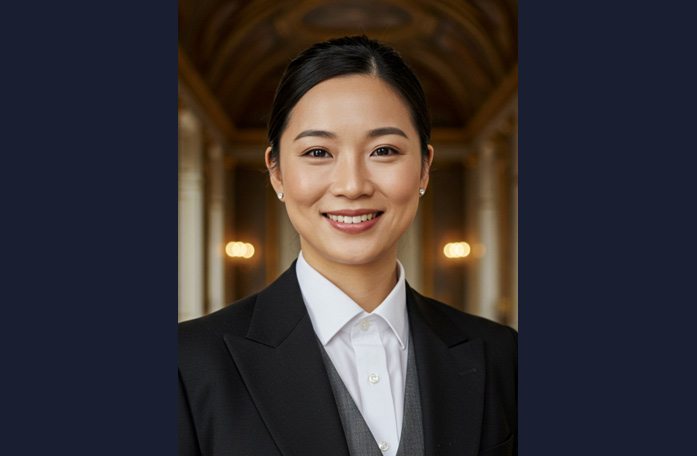
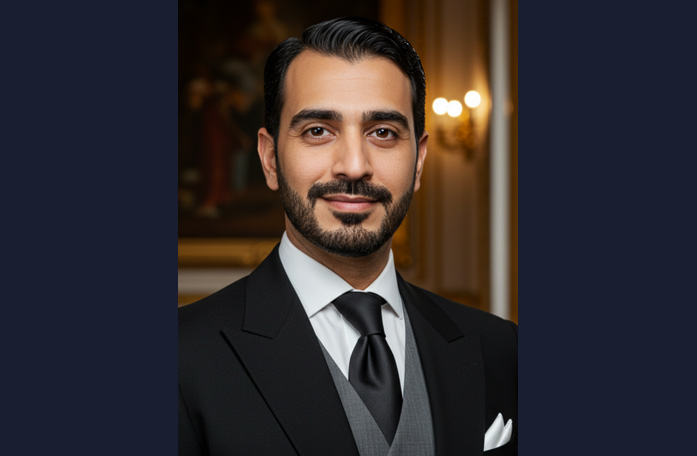
Your professional headshot should focus on attributes like likability, professionalism, competence, and leadership. The headshot often creates the first impression for potential employers. Keep you headshot current, updating it every few years or whenever your appearance changes significantly. Separate from the headshot which you will utilize on your resume, we also require some smart-casual pictures to capture your personality when we present you.

  • Features
    • Photographs should feature good lighting. Natural lighting is best.
    • The background should be neutral or a relevant setting for the sector of the industry in which you are applying, e.g. a kitchen for a chef placement, a household interior for a butler, or nautical for a yacht posting. It is important to wear professional attire that suits your industry.
    • Maintain a relaxed and approachable expression.
  • Composition
    • Typically the upper body is the focus, emphasizing the face.
    • The images should be in a portrait orientation, preferably with a 3:4 aspect ratio.
    • Light retouching is fine—adjust brightness, contrast, and crop as needed. Avoid heavy filters or airbrushing.
  • Attire and presentation
    • You should look polished and professional.
    • Ensure you adhere to the TIBA Personal Presentation Standard.
    • For your headshot and in a formal pose: Dress professionally in your butler's uniform, a business suit, or professional attire representing the sector in which you seek employment.
    • For a smart-casual pose: Dress comfortably, opting for a blazer over a crisp shirt or blouse, paired with chinos, tailored trousers, or a modest skirt. Avoid overly formal suits or ultracasual items like graphic tees.
    • Aim for a relaxed, confident smile. You want to look friendly but capable.

Recorded Video Standards

TIBA Standards for the Recorded Video Presentation
A video introduction of the candidate is a must to present to our clients. Like the headshot, it will be the initial connection our candidates make to generate interest with potential employers prior to their initial interview. It should include a warm greeting, a brief overview of your background, and highlight your unique skills and experiences relevant to the position.

  • Engaging Audience
    • Look directly toward and speak to the camera.
    • Use a tripod or have an associate hold the camera steadily for you.
    • Start with an intriguing statement or question to capture attention.
    • Make a clear introduction. State your name and provide a brief overview of your background.
  • Content
    • Make it personal and tailor the message to a prospective employer.
    • Highlight your skills, experiences, and personality traits which make you stand out.
    • Keep the video brief, ideally under three minutes to maintain the interest of the principal.
  • Appearance
    • Ensure you adhere to the TIBA Personal Presentation Standards.
    • Wear professional attire as you would for an in-person interview.
    • Use positive body language and gestures. Maintain good posture to appear enthusiastic.
    • Ensure you speak clearly. Use good lighting for a polished an professional look.
  • Personality
    • You want to make a genuine connection with the prospective employer. Let your personality shine through the camera.
    • The goal is to express excitement about your career and being considered for a position with
      the principal.

Interview Standards

TIBA Standards for the Interview

The interview is both a formal assessment and a personal exchange, offering you the chance to demonstrate professionalism, preparation, and character. Employers will be attentive not only to your answers, but also to your punctuality, attire, and manner of communication. A polished interview reflects confidence, discretion, and respect for the process, while also allowing your personality and strengths to come through. Treat each interview as an opportunity to affirm your competence and suitability for the role, leaving a lasting impression of reliability and poise.

  • Preparation
    • Have enough printed copies of your resume to provide one to everyone present at the outset of the interview when meeting in person, and always have one for yourself to which you may refer regardless of how you are meeting.
    • Research typical interview questions in advance. Prepare and practice sample answers suited for the position and employer.
    • Have two or three thoughtful questions memorized and ready to ask the interviewer at an appropriate time during the discussion.
    • Prepare and practice an introduction and a closing statement.
    • There is no excuse for being tardy.  If it is in person, research the route in advance to know your logistics.  Be on location 10–15 minutes in advance of the scheduled time.  If the meeting is in an office or public space or office, go in 5–10 minutes early.  If the meeting is in a private home, be there early, but do not knock on the door until precisely at the scheduled time.
  • Appearance
    • Ensure you adhere to the TIBA Grooming Standards.
    • Dress impeccably in professional attire to make a positive impression.  Always wear a business suit/attire no matter what the position.  Choose materials that are high quality to exemplify your attention to detail and professionalism.  Ensure your colours are coordinated, and accessories are elegant, understated, and not distracting.
    • For men: wear a classic silk tie in either a subtle pattern or solid colour.  A high-quality leather belt should be worn to complement your shoes.  Shoes should be clean and polished.
    • For women: a silk scarf tied around the neck or draped over the shoulders will add sophistication and indicate versatility. Jewellery should be elegant and understated.
    • Do not have too strong a scent, nothing overpowering with deodorant or aftershave.
  • Video calls
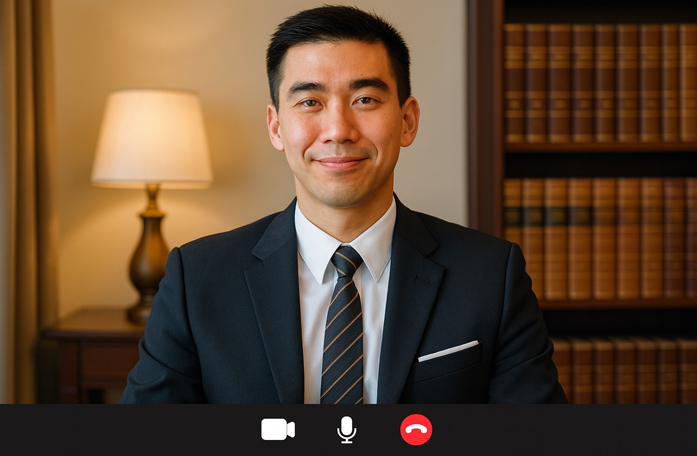
    • Choose a professional setting. Sit in front of a clean, neutral background such as a plain wall or tidy office space. Avoid clutter, personal items, or distracting décor.
    • Ensure proper lighting by positioning yourself so that natural or soft artificial light illuminates your face evenly. Avoid sitting with strong backlighting or shadows that obscure your features.
    • Frame yourself correctly. Keep the camera at eye level, centered on your head and shoulders. Maintain a comfortable distance so you appear clear and proportionate, not too close or too far.
  • Afterwards
    • Proactively reach out to the recruitment team to share your impressions of the experience.
    • Follow up by sending a polite note to thank and show appreciation to the interviewer, and to express interest in continuing to the next step.
Communication Standards

Communication in private service isn't just important. It is the cornerstone of excellence. And it is not just about speaking. It is about listening, understanding, interpreting, and responding with professionalism and grace. Communicate in a professional manner always.

  • Timeliness
    • Return emails and send follow up thank you letters (emails) promptly.
    • Send all requested items, revisions, and follow-ups in a timely manner otherwise you may fall out of consideration for a position.
    • Phone messages should be returned promptly.
  • Email
    • Emails should be formal and polite. Avoid spelling and typographical errors.
    • Include a signature in email with your name, email address, and telephone number.
  • Understanding of etiquette and protocol
    • All candidates are expected to exemplify the highest standards of etiquette and protocol as a reflection of professionalism, respect, and decorum.
    • These standards are assessed against recognized conventions to ensure alignment with our expectations.